
why birth stories matter
This blog post is inspired by my own nana, Rose, who recently shared her birth stories with me.
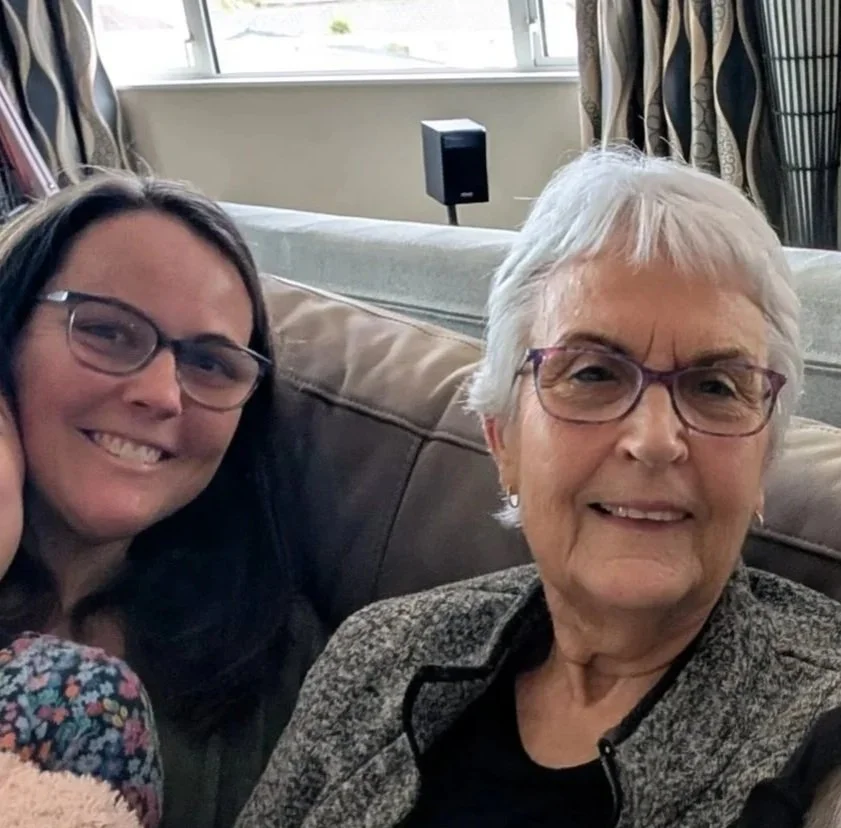
Her birth stories are ones of positivity.
In all seven births, she trusted her body, felt in control at all times and was confident in understanding all the stages of labour and had tools in managing these. This knowledge did not come from her own mother, nor from others in her community (who also didn’t speak about birth, or spoke of negative experiences), but a friendly neighbour who noticed she was pregnant with her first baby and gifted her Grantly Dick-Read’s book “Childbirth without Fear”.
With very little knowledge about birth herself, the book showed her a way to birth, away from the societal norm. She notes that this book and what she learnt from it had a huge influence in her 7 beautiful positive experiences of birth that were not filled with fear. Experiences that she never felt comfortable sharing in a community that spoke negatively about birth.
She generally kept her birth stories to herself, occasionally sharing the odd detail here and there with her own children, due to others squashing or dismissing her experiences in place of their negative ones.
A few months ago, she also shared her experiences with a family member of ours who was pregnant with her first baby. Hearing a positive outlook from someone in the family gave this expectant mama some confidence and she said it made everything feel less scary.
I feel honoured to be able to share a bit about her birth experiences and write this blog inspired by her journey.
How Birth stories Shape Our own Experience of birth
In decades past, talking about birth, even with one’s own mother, was often considered taboo and not important, with more emphasis placed on how to take care of baby. Leaving many pregnant women entering birth from a place of ignorance and putting trust into the doctors to manage their labour and birth, without knowledge of what to expect themselves. This was not always the way, but as a society, we mostly lost the innate knowledge about birth as it shifted into a general belief of putting trust into the hospital system, rather than listening to one’s own body. Many women were left distressed for a range of reasons and unable to share their stories or without memory of what birth was like for them all.
In more recent years, speaking about birth has become more accepted and the sharing of birth stories is more socially acceptable. To be talking about birth and sharing stories with other women is so important for everyone, but especially expectant mothers. These stories she hears from her family, friends, on a podcast, from the lady at the park, all form her beliefs about birth and shape the decisions she makes about her own birth.
However, the stories being told are, more often than not, those of a negative nature, or the “horror stories”. This is partly because there are in fact a lot of negative birth stories out there, and also people with positive birth stories find it difficult to share with a sea of negativity around them. When only a few people have a positive story in room full of negative stories, going against the grain and sharing can feel unsafe. Often these positive experiences are squashed or minimised because of these '“horror stories”, and the people with the negative stories tend to speak more about their experience as they connect and bond over it. This often leaves those with positive experiences without a place to share. In saying that, there has been a shift in recent years and there are more positive birth stories appearing in the form of podcasts and websites.
Being surrounded by stories of negativity by mothers, aunties, friends and others in the community, expectant mothers are much more likely to enter the birth space from a place of fear and hopelessness that their experience could be any different.
It is particularly powerful when women hear the stories from within their own family, as these tend to carry more weight for shaping her beliefs around her own birth. For example if her mother had very positive experiences, it can increase her own feeling of being able to also have positive experiences. If her mother shares negative experiences, it can reinforce that her experience would be the same. In this case, the context around the experience is important so that the expectant mother is able to make sense of and integrate that experience into her own knowing.
It is never too late to learn about the birth stories in your family and its never too late to share your own birth stories with your family.
Hearing just one positive story or being able to make sense of a negative one is enough to plant a seed that birth is not necessarily something to be feared, but an experience to look forward to.

If you are an expectant mother, ask yourself:
What are my current beliefs about labour and birth?
Where have these beliefs come from?
Do I know the birth stories of your mother, grandmother and other family members?
Have I heard any positive birth stories?
If you have children or grandchildren of your own, ask yourself:
Have I shared my birth stories with them? Why or Why not?
What information needs to be shared to help them understand the context around my positive or negative experience?
What experience with positive birth stories do I have?
Are you looking for support in navigating pregnancy, birth and postpartum?